

Wisdom Tooth Extraction – Mobile, AL
Alleviating Pain and Saving Your Smile!
 Many patients assume that permanent teeth have finished erupting by the time they are adults. However, that’s not the case. In fact, wisdom teeth typically don’t arrive until the late teens or early 20s. So, if you’re in that age range and you’re starting to experience chronic jaw pain or any other abnormal symptoms, they may be the culprit. The best way to find out is by scheduling an appointment with our team at Parker Dental & Orthodontics so we can determine if removing them is the best choice for your well-being.
Why Choose Parker Dental & Orthodontics for Wisdom Tooth Extractions?
- Caring and Experienced Team
- In-Office Membership Plan
- Multiple Convenient Locations
What are Wisdom Teeth?
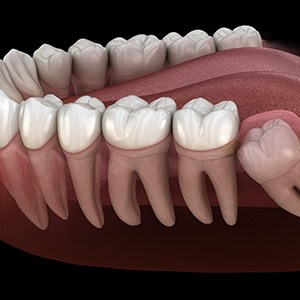
Over the years, wisdom tooth extractions have become a rite of passage. But what are they, and why is the procedure necessary? The short answer is that they are the third set of molars, which typically make an appearance between the ages of 17 and 21. Unfortunately, their late entry leads to serious problems regarding oral health. If you suspect that it’s time for you or a loved one to have their wisdom teeth removed, then contact us right away to schedule an appointment! We have multiple convenient office locations to choose from in the Southern Alabama and Mississippi area.
Why Do Wisdom Teeth Need to Be Removed?

In most cases, wisdom teeth simply don’t have enough room to emerge properly because of the surrounding teeth, and this leads to potentially serious problems. They may erupt at a sideways angle, only partially push through the gum line, or even become trapped altogether. These instances lead to higher risks of infection, facial swelling, and other unpleasant consequences. Fortunately, our doctors can inspect wisdom teeth with the help of digital X-rays before they’ve fully erupted. If any of these problems seem likely, we may recommend extraction as a preventive measure.
What to Expect from the Wisdom Teeth Procedure
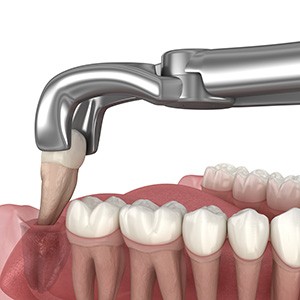
When performing wisdom tooth extraction, our team takes care to make the process as smooth and comfortable for the patient as possible. The first step? Numbing your mouth thoroughly so you don’t feel any pain as we work to remove the tooth. Next, we will grip the tooth, rock it loose, and extract it.
If the tooth in question is trapped underneath the gumline, then we will need to intervene with a surgical extraction. This involves a small incision being made so we can access it. Then, we can carefully remove the tooth section by section.
When we’re done, we’ll tend to the extraction site. As you heal, it’s common to experience some discomfort, oral bleeding, and swelling; these symptoms should improve over the course of a few days. Our team also provides a prescription for painkillers, if needed.
Recovering from Wisdom Teeth Extraction

To ensure the recovery period goes as smoothly as possible, we will provide you with a list of aftercare instructions, like:
- Taking prescribed or OTC pain medication as directed
- Changing the gauze pads as needed
- Sticking to a liquid diet for the first 24 hours
- Not using a straw, spitting, or smoking
- Using a cold compress for 10 minutes at a time
- Keeping your head elevated, including while you sleep
- Not participating in strenuous exercise, like jogging
Understanding the Cost of Wisdom Tooth Extractions

While you may need a wisdom tooth extracted, the procedure’s price could trouble you. (A treatment only helps when it fits your budget, after all.) Even so, the cost of wisdom tooth extractions varies; you’ll have to consult our team for an exact estimate. We can then find ways to make your care affordable, all while outlining its price factors, the role of insurance, etc. If you’d like more information, please keep reading or call us in the coming days.
Factors That Affect the Cost of Wisdom Tooth Extractions

Our dentists will closely check your smile at the initial consultation. By doing so, we’ll assess (among other things) factors that affect your treatment’s cost. These include the following:
- Number of Wisdom Teeth – As you’d expect, it costs more to extract multiple wisdom teeth than to remove just one. Every “extra” tooth adds to your treatment’s overall price.
- Impaction – As they’re harder to remove, impacted wisdom teeth cost more to extract. The type of impaction also affects the price.
- Treating a soft tissue impaction doesn’t cost much more than usual. Indeed, it’s fairly easy to remove a wisdom tooth that’s partly emerged from the gums.
- On the other hand, a bony impaction can prove costly. Removing a tooth lodged in the jawbone is a complex effort.
- Sedative Use – In some cases, an extraction will require (or benefit from) dental sedation. Just know that adding sedatives will increase your care’s price.
- Specialist Type – You’ll require an oral surgeon if you need a complex wisdom tooth extraction. In that scenario, you’ll pay more for a higher level of expertise.
Does Dental Insurance Cover Wisdom Tooth Extractions?

Some dental plans don’t cover wisdom tooth extraction, while others do. Your coverage will ultimately depend on your plan’s type, its provider, etc. All that said, any benefits you have will require that you meet your annual deductible and maximum first.
To learn your plan’s details, please consult your insurance provider before treatment. Our dental team will gladly help if necessary.
How to Make Wisdom Tooth Extractions Affordable

As helpful as insurance can be, it’s not the only way to make wisdom tooth extraction affordable. You can also rely on our practice’s helpful and varied payment options, such as:
- In-Office Membership Plan – By paying a monthly or annual fee, you can join Parker Dental & Orthodontics’ in-office membership plan. The latter would give you a 10% discount on wisdom tooth extractions.
- Flexible Financing – Our practice proudly works with CareCredit, a reputable 3rd party financier. They would help you pay for a wisdom tooth extraction in manageable monthly installments. Better yet, these reduced payments would have little to no interest attached.
If you need a wisdom tooth extracted, don’t “break the bank” for your treatment. Instead, visit our office – we’ll provide affordable help!
Wisdom Tooth Extractions FAQs
Why are Wisdom Teeth Called That?
If you haven’t already guessed, wisdom teeth don’t get their name from being wise. Their moniker stems from how and when they tend to occur.
Remember, wisdom teeth don’t emerge until early adulthood – one’s late teens or early 20s. Countless people view this period of life as the “years of wisdom,” when a person outgrows childishness and becomes much more prudent. Third molars are thus called wisdom teeth because you get them at a crucial point: the time during which you shift from adolescent to true adult.
Of course, the facts above don’t mean people without wisdom teeth aren’t adults. Third molars just happen to show up (if at all) when you’re becoming (or already are) grown up.
Does Everyone Have Wisdom Teeth?
In reality, not every teen or adult has (or gets) all four wisdom teeth. Some are born missing at least one, while others don’t develop third molars at all.
Solid scientific research backs up this fact. In a 2015 study published by the Dental Research Journal, scholars found that 5 to 37% of people worldwide lack at least one wisdom tooth. The researchers didn’t find a definitive cause for the lack of third molars, but they speculated that genetics plays a role. Parents missing their own wisdom teeth may be more likely to have kids without some as well.
Is Wisdom Tooth Removal Painful?
Professional wisdom tooth removal isn’t painful at all. So long as it’s handled by a qualified dentist, the process is easy and free of discomfort.
The truth is that your mouth will be numbed before the removal even starts. By applying a local anesthetic to the treatment site, the dentist ensures the procedure doesn’t cause aches. The most you’ll feel as the dental team operates is a slight pressure, which comes from your tooth being gently rocked back and forth in its socket.
You’ll only feel soreness (if at all) after the removal is done, when the anesthetic wears off. Even then, the discomfort will fade quickly; you’ll feel back to normal within a week.
How Long Does Wisdom Tooth Removal Take?
It takes roughly 15-20 minutes for a dentist to remove a wisdom tooth, with the extraction of all four often taking 90 minutes. That said, you’ll barely feel as if any time passes at all.
You’ll almost certainly be sedated before the extraction process starts. As the sedative takes effect, it’ll (temporarily) alter your ability to form memories and gauge the passage of time. That means you’ll look back on your wisdom tooth removal as if it only took a moment or two. You won’t have a strong recollection of what happened between the before and after, so you’ll feel as if little time passed.